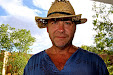
In a few days will mark the 7th anniversary of my father’s death .
I was living in Castiglion Fiorentino at the time, and had just returned to Austin for a job interview at the Harry Ransom Center, where I would soon become the Curator for Academic Affairs for a few years. During the interview process, of which there were several days, I was walking down Duval street, near where we had lived for many years and were renting out our house and I was staying in the garage apartment, and Charlton, a friend of the family, pulled over in his car and told me that people were looking for me, my father was in the hospital.
He died soon afterwards in Louisville, Kentucky, where he had been living, racing cars, teaching surgery, and living hard as he always had. I remember calling my ex-wife at the time, who was visiting Rome with her mother, and just said, “He didn’t make it.”
I flew to the funeral, attended it, gave a eulogy along with my sisters, and then went back to Austin, finished the job interview process, then flew back to Italy, where we were wrapping up an eventful two years, for better and for worse, with a small death of our own, and was about to repatriate to the US for what would just be a couple years before coming back to Europe, this time here in Belgium.
While I was a visiting professor at L’Università di Bologna, I had the pleasure of teaching a course on James Joyce’s Ulysses with the eminent Joycean scholar Rosa Maria Bosinelli, for whom I am grateful for introducing me into the international community of Joyceans in Italy and Europe.
It was during that course that I was able to flesh out the Ulysses portion of my book on James Joyce, and specifically with regards to the chapter that is often colloquially called “Circe” within the novel and is often considered to be the chapter that ushered in the post-modern within the novel. Superficially it is a play within a play, but that is nothing new, and Joyce already makes the cameo of such a literary device in the “Scylla and Charybdis” chapter, directly given the nod to Shakespeare’s “Hamlet,” which itself plays a critical role in the novel, and most certainly in “Circe” as well.
My book is about the relationships of Memory and Death in the works of James Joyce, and how like the Ancient Greeks believed, we die two deaths. One death is the physical death, the small death, but the big one, is if we are forgotten. To truly kill an Ancient Greek was to forget him or her after his or her death.
Thinking about my father this week, there is still something hanging over me, as what happens with Odysseus. Odysseus learns from Circe that he must go to the Underworld and to propitiate a hungry ghost, that of Elpinor, a minor character at best, before he can unlock the lips of the dearly departed to find out more about his own Fate in the world of the living. Elpinor was amongst the partying crowd of Odysseus’ sailors, who in their revelry, got drunk and Elpinor fell to his death from a second-story roof, breaking his neck. The point was, though, is that Elpinor’s ghost was unquiet, or hungry, because he had been forgotten when the ships left again to try and return to Ithaca. As such, Odysseus had to pay homage to his ghost and to appease the Shades of Hades in order to continue with his own life.
Although I buried the hatchet with my father when he was alive as I remember our last conversation very well as it was from a small phone shop in Castiglion and for the first time in my life, instead of asking “why are you doing x, y, or z?” and this time the “x” factor was “living in Italy,” he just seemed genuinely happy for me. I am also very happy with my eulogy and that I was able to deliver one, given the timing of it all.
However, I still have part of his ashes here in my apartment, and there is something that I have yet to do. One of the few trips that I took with my father, and one of the few decent moments of that trip, was to Scotland when I was giving a paper in Dundee at a James Joyce conference there. We traveled some afterwards and one of the places we went was the battlefield of Bannockburn, where King Robert Bruce (whom my father dearly hoped we were named after, me being a Junior to his Senior, though he went by Bob) and his Scottish highlanders gave it to the British in the turning of the tide for Scottish Independence in 1314.
It was on that battlefield that I really sensed the power of place, or being in situ for an event in Time. My father was transformed, and I believe that that day he saw Robert the Bruce and his armies fighting. He was on the battlefield of Dharma , and the godhead of History was revealed to him. It was one of the times that I saw my father cry, though not the self-pitying maudlin crying that he was wont to do after too many beers, but tears of a lost Time and a lost Place.
It was then that I made a promise to myself to one day take his ashes, should he be cremated, which he was, to that field and to scatter them. I am sure that I will bring a recording of “Amazing Grace” on the bagpipes or have a live piper go with me, for my dad would play that at screechingly loud volumes when he was enthused by the mood, and I believe that then I can put his ghost to rest, or at least the part of him that is with me in my apartment in its small urn. Though a small death in the grand scheme of things, he was my dad, and I loved him, faults and all.